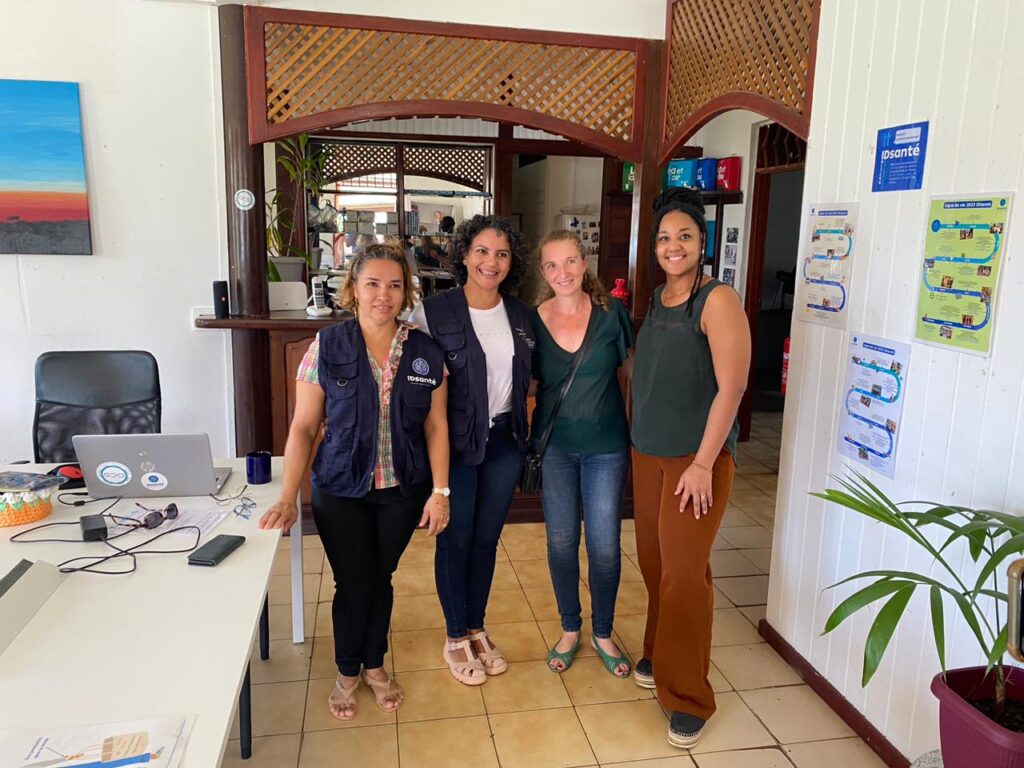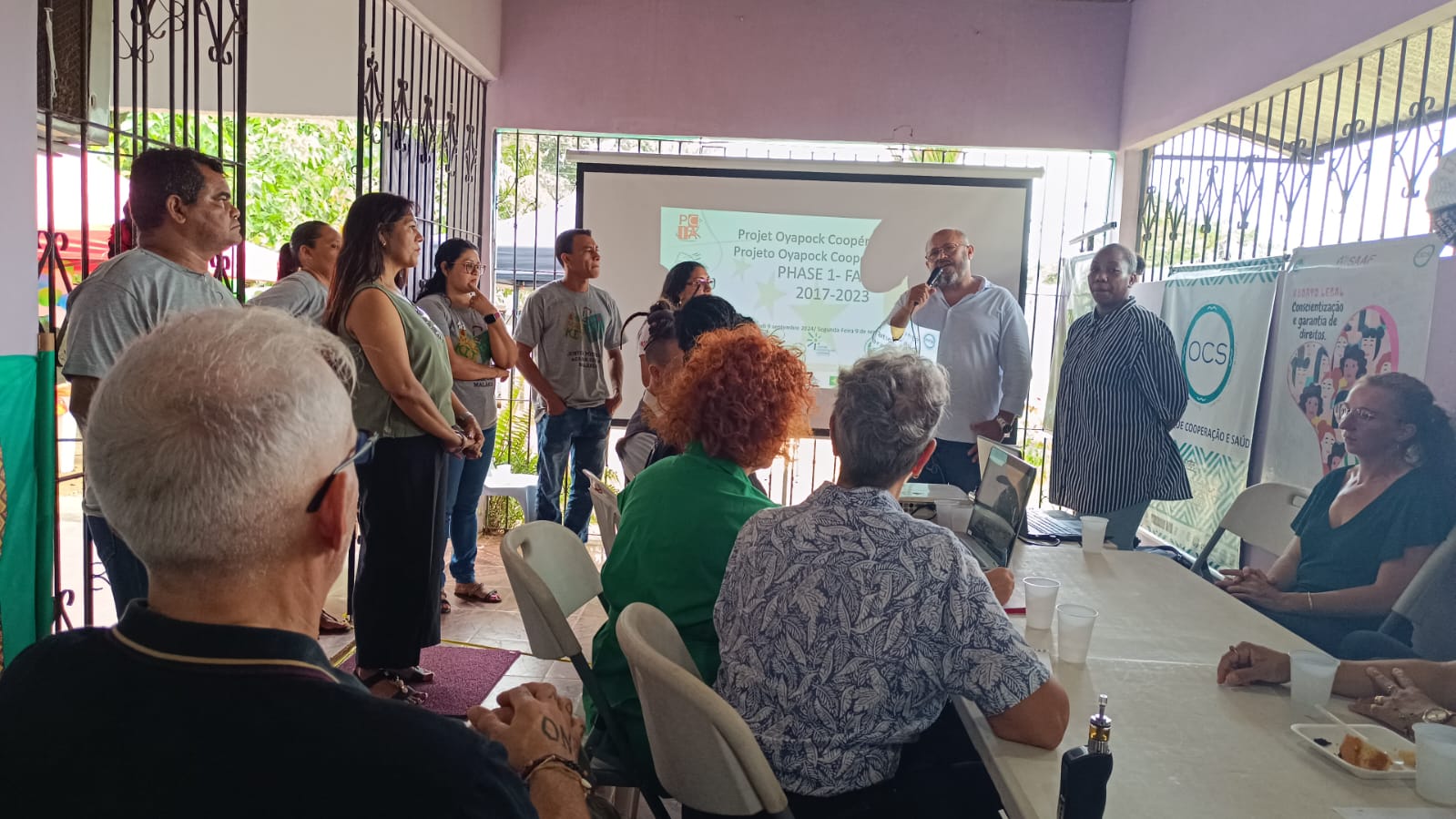
On the France-Brazil border, health knows no borders. This is the principle behind Oyapock Coopération Santé (OCS), a programme created in 2017 to respond to the HIV epidemic and to the difficulties of accessing care in this particular area. Led by a consortium bringing together the French association IDsanté, the Brazilian association DPAC Fronteira and the Centre Hospitalier de Cayenne, OCS pools the resources and expertise of each territory in order to offer concrete solutions to shared health issues.
Shared challenges, tailored responses
OCS tackles three major challenges:
- combating sexually transmitted infections (STIs), in particular HIV,
- preventing and responding to gender-based violence,
- reducing unplanned pregnancies.
Thanks to concerted action, several significant advances have already been achieved:
- Opening of HIV care in Oiapoque (Brazil), guaranteeing patients access to local care and generating nearly 4 million euros in savings for the French health system,
- Documentation of the needs of the populations in terms of sexual and reproductive health,
- Development of tools adapted to local realities,
- Creation of a sexual health resource centre in Saint-Georges-de-l’Oyapock.
A new stage to strengthen the impact
Building on these early successes, OCS is now entering phase 2 with three strategic objectives:
- Improving the prevention and treatment of STIs, including HIV,
- Strengthening women’s empowerment and the quality of services linked to pregnancy planning,
- Improving the prevention of and response to gender-based violence.
With a total budget of more than 2 million euros, including 1 600 000 € funded by European funds (FEDER-CTE), phase 2 will make it possible to consolidate the gains made and to broaden the actions for the benefit of the populations living on either side of the Oyapock.
An exemplary cooperation
In a region where administrative borders often complicate access to rights and to care, OCS demonstrates that a cooperative, cross-border approach is both possible and effective. By placing sexual and reproductive health at the heart of its priorities, the programme contributes to greater health equity and to a lasting improvement in the quality of life of the populations on either side of the Oyapock.