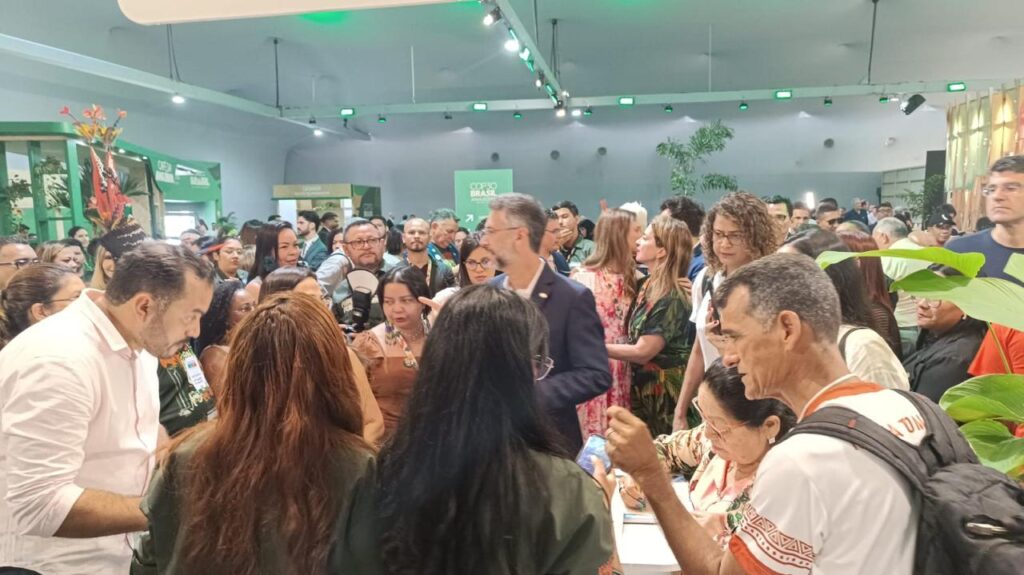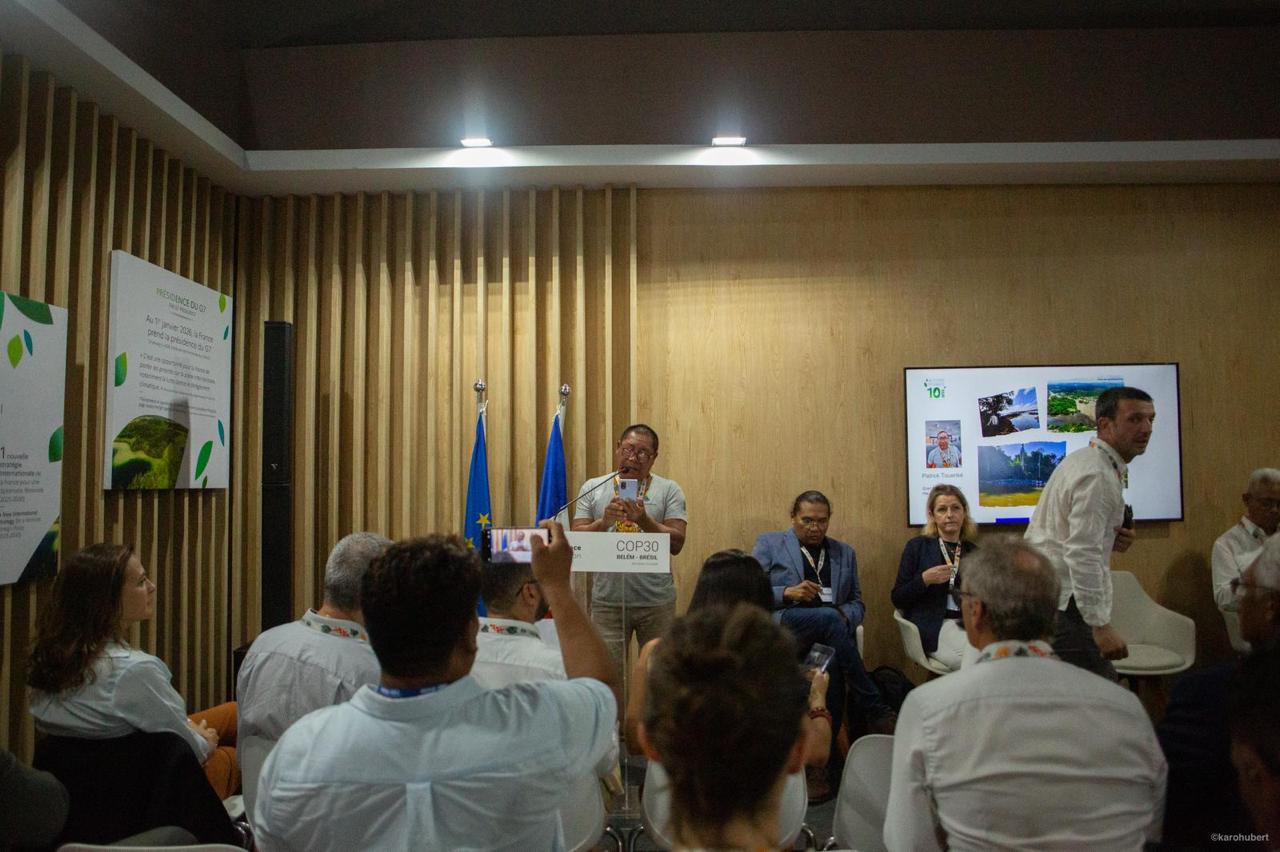
In Belém, the 30th Climate Conference (COP30) is in full swing and the pavilion of the Collectivité Territoriale de Guyane (CTG) is never empty. Guyane is placing itself at the heart of the discussions on the place of indigenous peoples, the regulation of biodiversity, the exploitation of natural resources and architecture that respects the Amazonian territories.
Monday 17 November
The week opens under the sign of research, youth and intercultural dialogue. The Université de Guyane presents the HEAU research project, devoted to the relationships between people, water, uses and knowledge, as well as its new bachelor’s degree in Languages, Teaching and Mediation in the Amazonian Environment, which trains mediators rooted in the realities of the territory. For their part, IFREMER and WWF set out the creation of monitoring indicators for cross-border aquatic environments, which are essential to the shared management of resources.
At the same time, several highlights celebrate indigenous peoples and scientific cooperation, with the MNHN, GADEPAM and Brazilian partners. The Wayana‑Apalaï and the Mebêngôkre‑Kayapo open a powerful dialogue on the thousand-year-old management of resources, before the Local Conference of Youth Guyane gives the floor to young people, at the crossroads of academic knowledge, traditions and civic engagement.
Tuesday 18 November
Tuesday showcases the diversity of the players from Guyane around the issues of deforestation, architecture, culture and biodiversity. Guyane Nature Environnement raises the alarm about the deforestation linked to gold mining, while the Ordre des architectes offers the exhibition “Architectures amazoniennes à l’horizon”, showing that land-use planning that respects local characteristics is both possible and desirable.
Conferences, films and debates follow one another around Wayana‑Apalaï art, with the screening of the short film on pottery « En terre indigène », led by GADEPAM, ITEMKOM, the Parc amazonien de Guyane and the Université de Guyane. These events make up a gallery of portraits of the people of Guyane, in which culture, identity and the fight against climate change echo one another.
Wednesday 19 November
Wednesday is spent in the field, with a visit organised alongside the Delegação do Amapá and ICLEI (Local Governments for Sustainability), rounded off by discussions between Caritas Brésil and Caritas Guyane. The contributions of Guyane Forest Initiative, Nature Rights Guyane, the Réseau des Savoirs de la Forêt and the Parc amazonien de Guyane highlight low-carbon methods, jaguar conservation and the sustainable management of tropical forests.
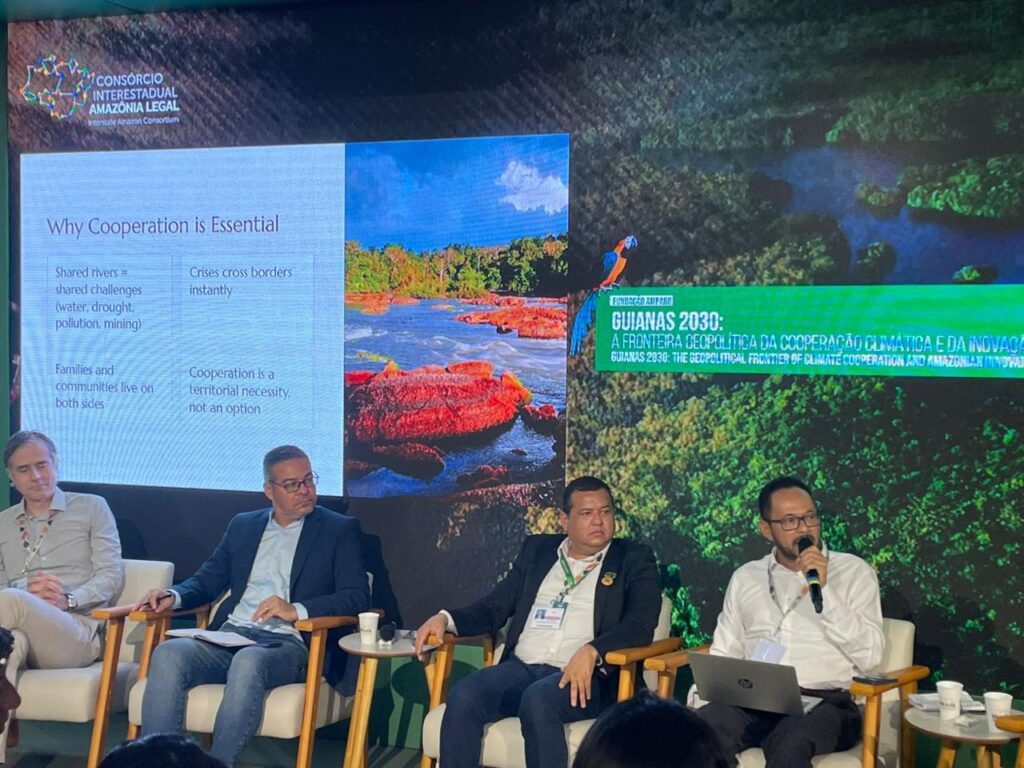
At the end of the day, the Conseil régional de l’Ordre des Architectes de Guyane (CROA) looks back at the way the coastal strip of Guyane has changed and opens up avenues for building in shifting flood-prone areas, as close as possible to the realities of the coastline.
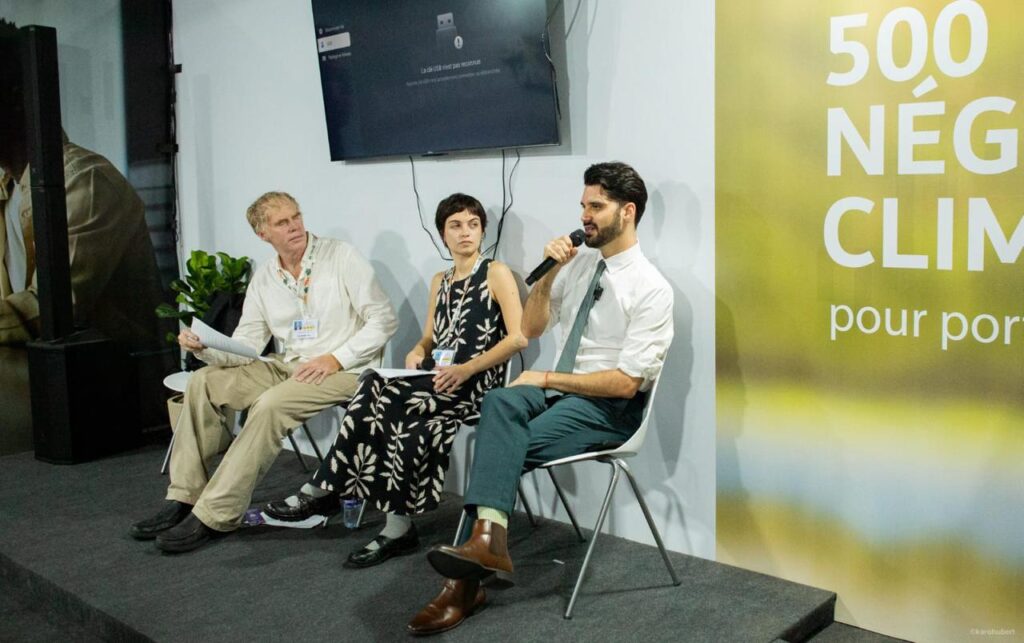
Thursday 20 November
For this last day of the week, Guyane focuses on concrete solutions for degraded areas and local economies. Guyane Forest Initiative sets out the importance of the Label Bas Carbone Terres Agricoles in giving degraded areas a sustainable purpose again, while Guyane Nature Environnement highlights the potential for ecotourism and sustainable agritourism in the territory.
The International Union for Conservation of Nature (IUCN) examines the intensive maritime exploitation of the Guiana Shield and the renewal of fishery resources, laying the foundations for more responsible management. Finally, the CROA shares its work on the sustainable rehabilitation of substandard housing and on improving quality of life, closing a week in which Guyane asserts itself as a living laboratory of the ecological and social transition in Amazonia.
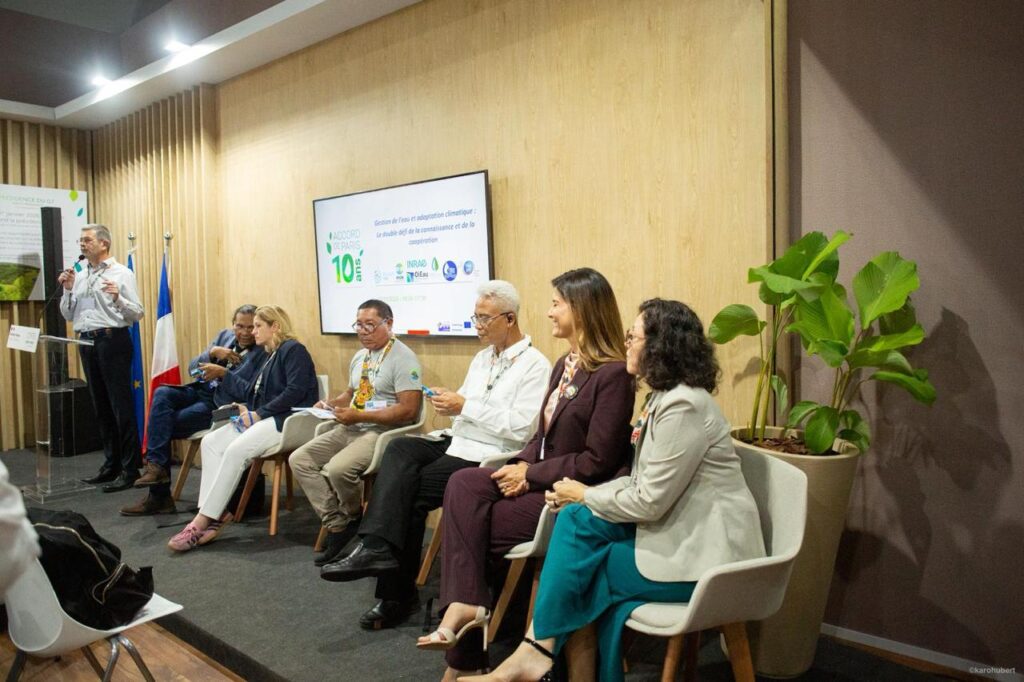
Main objectives of COP30
It was necessary for a delegation to be present with our neighbours, in a pavilion that was complementary to but independent from the France area. The consequences of climate change and of pollution directly affect the territory; so whether it was a matter of taking stock for the anniversary of the Paris Agreement, of discussing the responsible use of Guyane timber, of opening up digital access for the Amazonian populations, of the shared management of the water resources of the Guiana Shield, of presenting innovative solutions or of mobilising public climate funding in order to limit the rise in temperature, these were two weeks packed with meetings and events.